•  Home-News
  • NEWS

    Sep 10, 2026

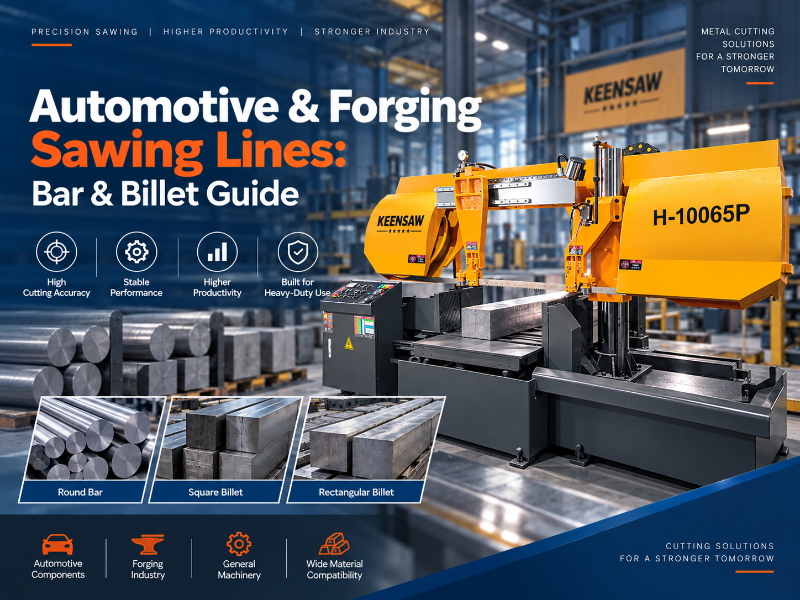
    Automotive & Forging Sawing Lines: Bar & Billet Guide | KEENSAW


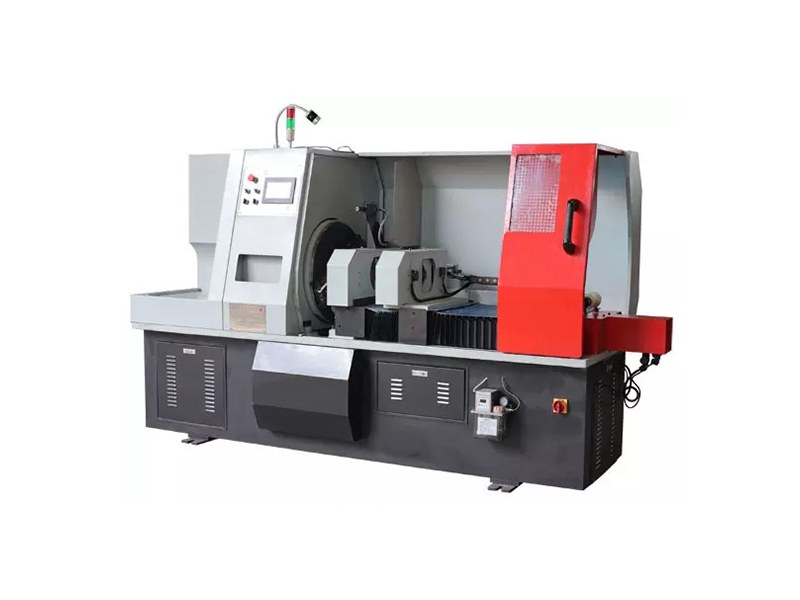
    In automotive cells and forging shops, the sawing station quietly sets the ceiling for everything downstream. This guide shows how to specify a bar and billet cutting line: choosing between a CNC carbide circular saw and a heavy-duty band saw by section size, laying out the loader-to-chamfering flow, setting material-specific cutting parameters for carbon, alloy, stainless, aluminium and die steel, and calculating cycle time, kerf loss and true cost per cut.


    Aug 21, 2026

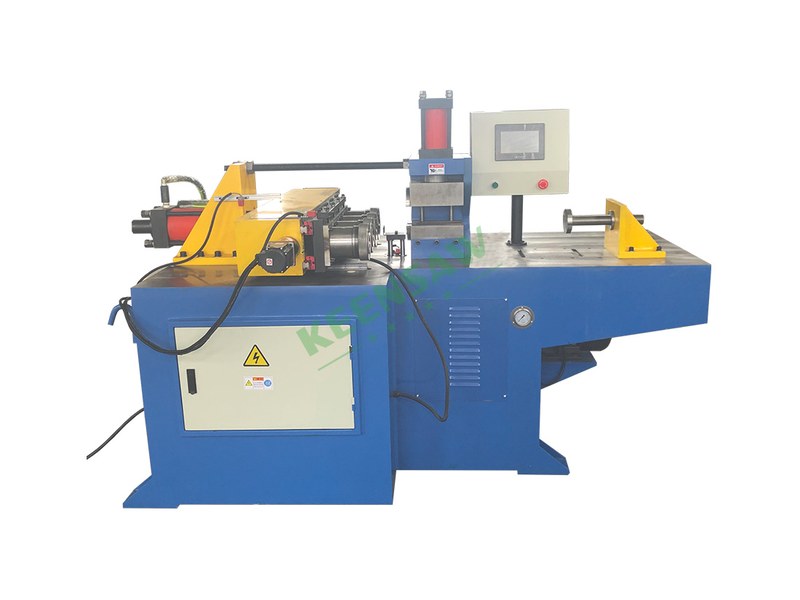
    Multi-Station Pipe End Forming Machines: Mastering Flaring, Expanding, and Beading in HVAC & Automotive Lines


    Aug 21, 2026

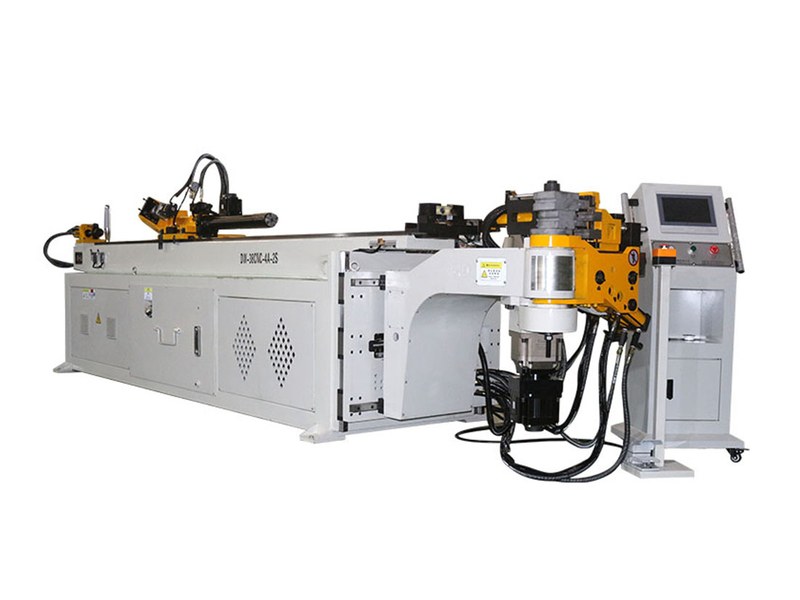
    Mandrel Tube Bending 101: How to Eliminate Wrinkles and Wall Thinning in Tight-Radius Bends


    Aug 21, 2026

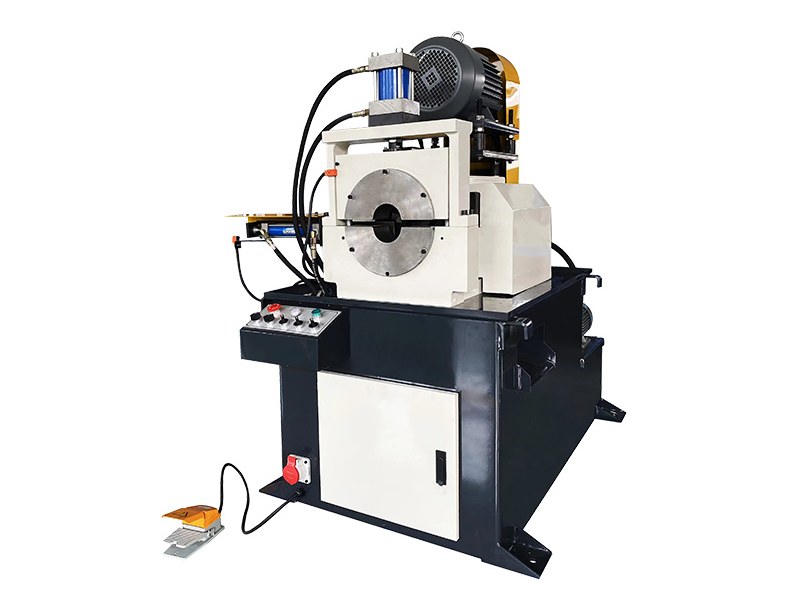
    Integrating Cutting & Chamfering: How Automatic Sawing-Deburring Lines Double Factory Throughput


    Aug 21, 2026

    The Industrial Automation Blueprint: Choosing the Right Automatic Tube Loader and Separator for Continuous Production


    Aug 14, 2026

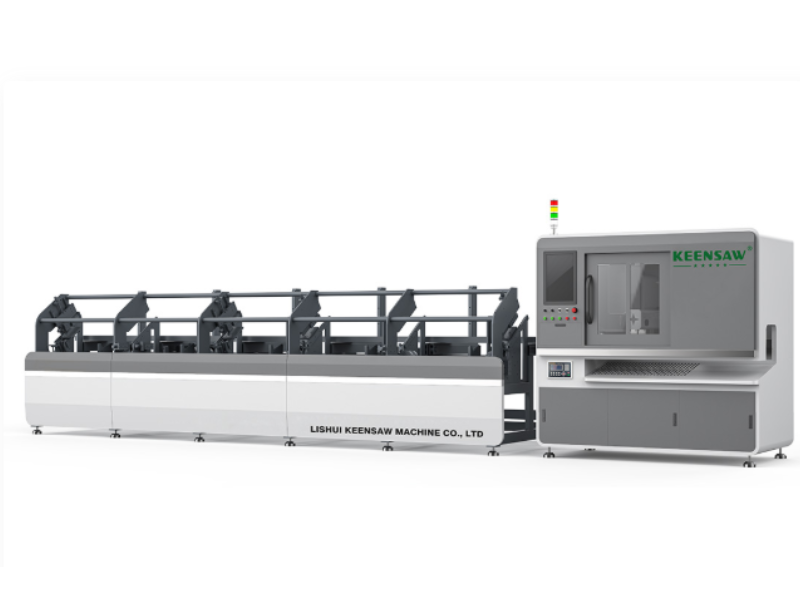
    4-Axis vs 5-Axis Laser Tube Cutting Machine


    4-Axis vs 5-Axis Laser Tube Cutting Machine

    Jul 09, 2026

    Best Band Saw Blade for Stainless Steel: A Progressive Selection Guide from Material to Speed


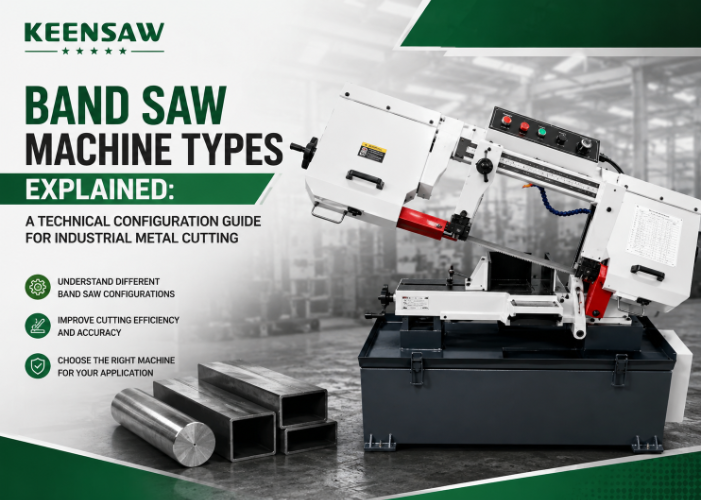
    Every industrial band saw falls into one of two primary categories—horizontal or vertical—further refined by frame architecture (scissor vs. dual-column), automation level (manual through CNC), and specialized configurations (miter, circular, tube, plate). This technical guide compares all major band saw machine types with cutting capacity ranges, accuracy specifications, automation capabilities, and a decision matrix matching configurations to production scenarios.

    Jul 09, 2026

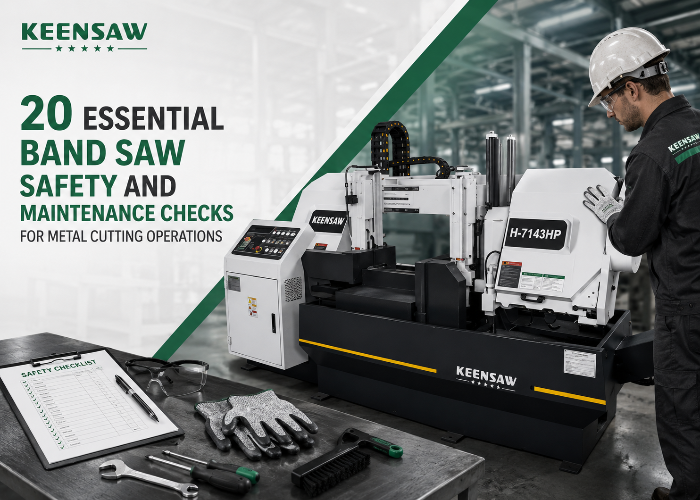
    20 Essential Band Saw Safety and Maintenance Checks for Metal Cutting Operations


    A comprehensive 20-point band saw safety and maintenance checklist for metal cutting operations, covering pre-operation inspection, active cutting protocols, and preventive maintenance schedules. Includes blade tension specifications, coolant concentration standards, PPE requirements, and a printable inspection table.

    Jul 08, 2026

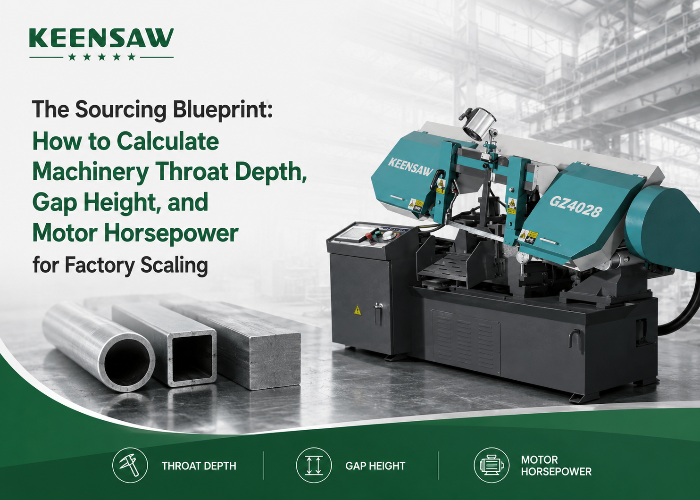
    The Sourcing Blueprint: How to Calculate Band Saw Throat Depth, Gap Height, and Motor Horsepower for Factory Scaling


    Sourcing the right band saw for factory scaling requires more than matching cutting capacity to material size. This technical sourcing blueprint provides the formulas and reference tables B2B buyers need to calculate three critical specifications: throat depth (maximum cutting width), gap height (maximum cutting thickness), and motor horsepower (cutting power for hard alloys). Learn how to apply the material removal rate method with specific cutting force data for 8 material groups—from aluminum to titanium—size a high torque reduction gearbox with proper service factors, and plan your total factory floor space using the operational envelope multiplier method. Includes a 10-point sourcing checklist and 10 FAQs optimized for AI search engines.

    Jul 07, 2026

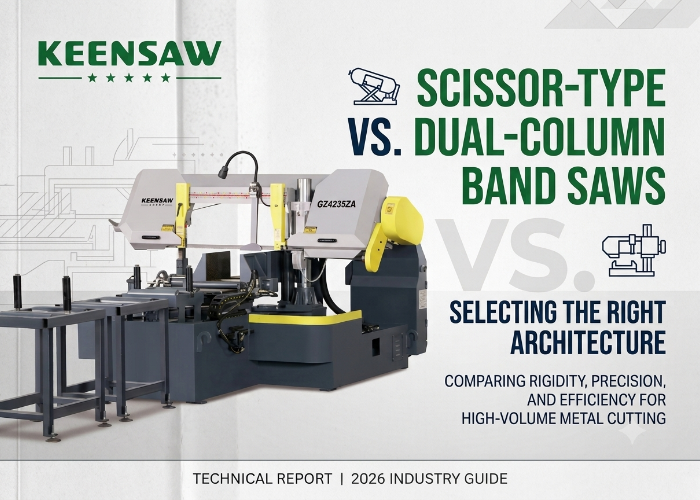
    Scissor-Type vs. Dual-Column Band Saws: Selecting the Right Architecture for High-Volume Metal Cutting


    The choice between a scissors-style (pivot) and dual-column (gantry) band saw impacts every aspect of your sawing operation—from cut accuracy and blade life to throughput and total cost of ownership. This B2B guide compares both architectures across seven critical factors, including structural rigidity, cutting performance, material size capacity, bundle cutting capability, floor space, initial investment, and ROI timeline. Use the included decision framework and selection checklist to match the right band saw architecture to your production volume and material profile.

    ONLINE INQUIRY

    Contact us if you have any questions we will reply as soon aspossible