Coolant is not an accessory—it is half the cut. On a band saw it does four jobs at once: pulls heat out of the tooth tip, lubricates the chip so it slides instead of welding, flushes swarf out of the gullets, and protects the finished face from corrosion. Get coolant wrong and a good blade dies in minutes; get it right and blade life doubles. This guide covers coolant types, flood vs mist, mix ratios, selection by material, and the troubleshooting that keeps a tank healthy.
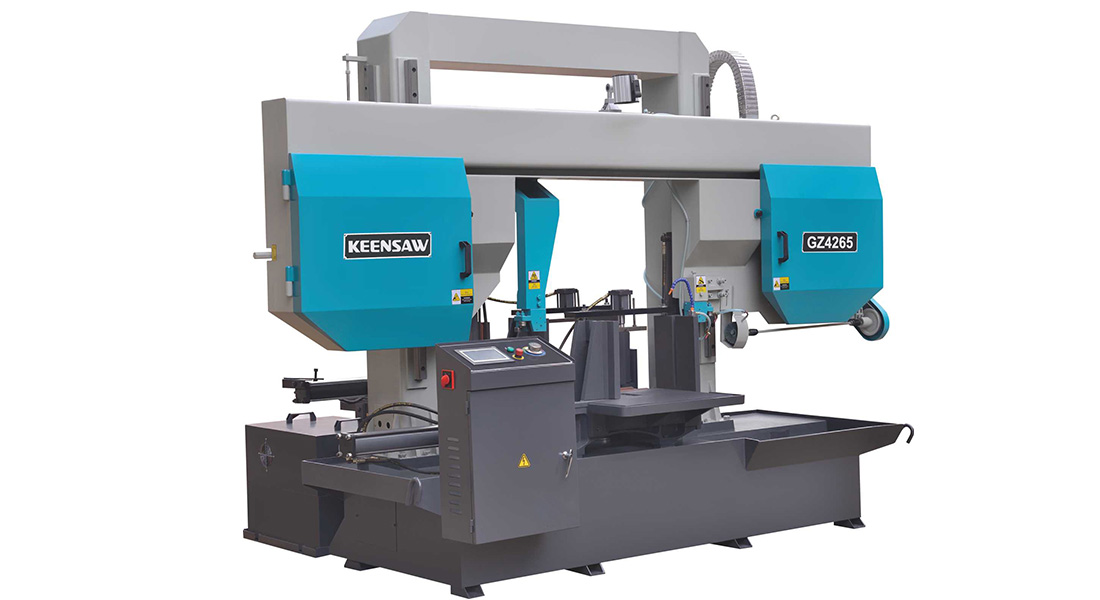
A band saw tooth enters the work, shears a hot chip, and leaves—thousands of times a minute. Without coolant the tooth tip reaches forging temperatures, the chip welds to the edge (especially on aluminum and stainless), and the gullets pack with hot swarf that scores the cut face. Coolant drops the tooth temperature, carries the chip away, and lets you run higher feed without burning. On stainless and high-strength alloys, flood coolant is not optional—it is the difference between a cut and a seized blade.
| Type | Makeup | Use |
|---|---|---|
| Soluble emulsion | Oil-in-water, 3–10% | General steel, most shops; good cooling. |
| Synthetic (no oil) | Chemical in water | Cleaner, aluminum-friendly, less residue. |
| Semi-synthetic | Blend | Balance of lubriction and cooling. |
| Neat (straight) oil | Undiluted | Hard alloys, broaching-like cuts; best lube, poor cooling. |
| Mist / MQL | Minimal quantity | Small sections, clean shops, where fluid recovery matters. |
| Factor | Flood | Mist (MQL) |
|---|---|---|
| Cooling power | High | Lower |
| Chip flushing | Excellent | Weak |
| Workspace cleanliness | Wet, needs tank | Dry, minimal fluid |
| Best for | Steel, stainless, volume | Small sections, aluminum, clean cells |
Flood wins for most steel and stainless because it both cools and flushes. Mist wins where the section is small, the shop wants to avoid a tank and sludge, or the next process needs a dry part. Many modern saws offer both; pick by material and cell layout.
Soluble emulsions are usually mixed 3–10% concentrate in water, with 5% a common all-round setting. Too weak and you lose lubrication and invite rust and bacteria; too strong and you waste fluid and leave a sticky residue. Always mix into water (never water into concentrate) and use clean, soft water—hard water ties up additives and scales the system. Check concentration weekly with a refractometer, not by eye; a one-point drift changes blade life.
Blade life tracks coolant discipline more than most operators admit. Correct concentration, clean delivery to the cut (both sides of the blade), and a chip-free tank routinely double blade life versus a neglected system. Coolant also steadies surface speed—without it you must slow down, losing throughput. Treat coolant as a consumable you manage, not a top-up you forget.
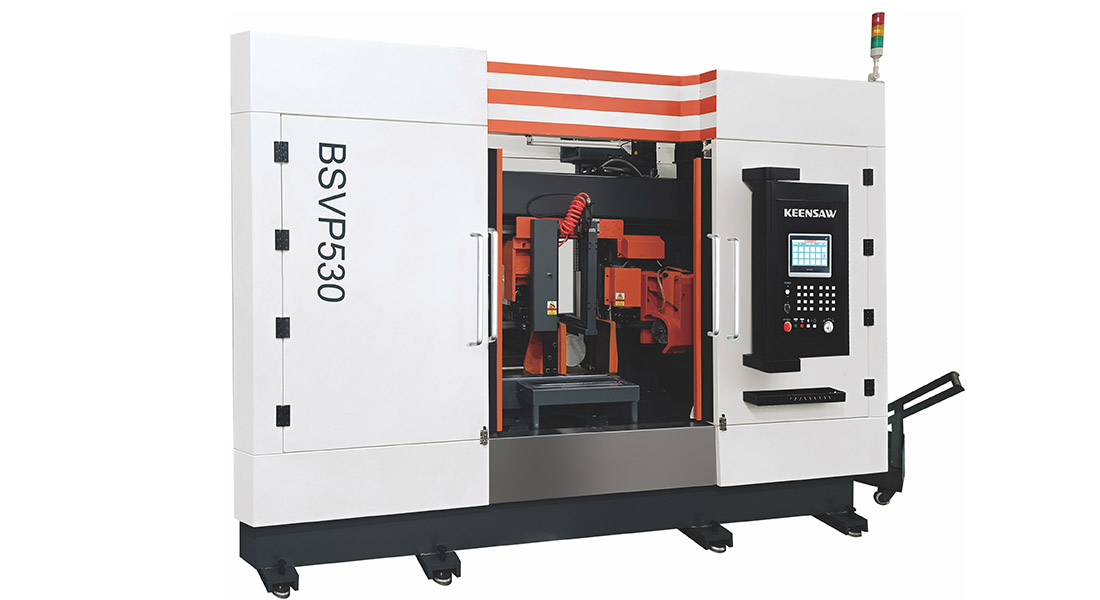
| Material | Recommended coolant | Note |
|---|---|---|
| Carbon / alloy steel | Emulsion 5% | Standard flood. |
| Stainless steel | Emulsion 5–8%, flood | Strong delivery, low speed. |
| Aluminum | Synthetic or mist | Avoid sticky residue; watch buildup. |
| Tool steel / exotic | Neat oil or high-additive | Lubrication first. |
| Cast iron / brass | Minimal / mist | Often near-dry to avoid clogging. |

Chips in the tank recirculate, grind the pump, and score parts. A settling tank plus a magnetic or paper filter keeps the fluid clean; for volume, a centrifuge or bag filter pays for itself. Drain and clean the tank on a schedule (monthly for heavy use), dispose of spent fluid per local rules, and never let summer heat turn a stagnant tank into a bacteria farm—an ounce of biocide and a clean tank prevents the smell and the skin complaints.
Mist coolants throw a fine aerosol that, over years, is a respiratory and slip hazard. Fit a mist collector at the cut, keep guards closed, and service filters. Where operators are close to the machine, flood with a well-managed tank is often safer than open mist. Either way, post the SDS and train staff on handling concentrate.
| Symptom | Likely cause | Fix |
|---|---|---|
| Rust on cut face | Too weak / contaminated | Raise concentration; clean tank. |
| Sour smell | Bacterial growth | Biocide; drain and clean. |
| Foam | Hard water / wrong product | Soft water; anti-foam additive. |
| Burning | Low delivery / too fast | Aim nozzles; reduce feed. |
| Sticky residue | Too strong on aluminum | Switch to synthetic; lower %. |
It is not enough to have fluid in the tank—it must reach the tooth. Flood systems use nozzles or a manifold that wets both sides of the blade at the cut, because the tooth cuts on one side going down and the other coming around. Mist systems need aimed jets and enough volume for the section. A clogged nozzle or a misaimed jet is a silent blade-killer: the operator sees fluid spraying, but the actual cutting edge stays dry. Inspect nozzles weekly and aim them by hand on a test cut.
Concentration drifts with use and climate. In hot months evaporation concentrates the mix and bacteria thrive; in cold months topping up with plain water dilutes it and rust appears. Check with a refractometer weekly, log the reading, and correct by adding the right ratio—never just water. A simple tank log turns coolant from a mystery into a managed variable, and the blade-life gain pays for the habit.
Managed coolant is one of the cheapest improvements on a cutoff line. Correct strength and clean delivery routinely double blade life; fewer blade changes mean less downtime; and a clean tank means fewer rejected faces from embedded swarf. Against that, the cost is a refractometer, a filter, and a few minutes a week. For a shop running dozens of blades a month, the payback is measured in weeks, not years.
Spent emulsion is a controlled waste in most regions—don’t pour it down the drain. Skim tramp oil, keep it out of the sewer, and contract a licensed hauler for disposal or a recycler that recovers the coolant. Synthetic fluids are easier to separate and recycle. Good housekeeping here protects both the environment and the shop from fines, and a clean system lasts longer between drains.
Coolant and blade are a pair, not separate purchases. A premium M51 or carbide blade still dies early in stainless if flood delivery is weak or the mix is thin; conversely, a modest bi-metal blade lasts surprisingly long with correct, clean flood coolant. When you upgrade material to stainless or exotic alloy, upgrade the coolant program at the same time—higher concentration, strong delivery, and a clean tank. Shops that treat blade and coolant as one system get the published blade life; shops that don’t blame the blade for a coolant problem and waste money.
A half-hour setup and a weekly glance turn coolant from a mystery into a managed, repeatable variable that protects every blade on the floor.
Want a coolant and blade setup tuned to your material mix? Contact KEENSAW with your alloys and section sizes. We’ll specify blade grade, TPI, and the flood or mist system that maximizes blade life on your line.
Contact us if you have any questions we will reply as soon aspossible