Teeth per inch (TPI) is the single setting that decides whether a band saw cut is clean or a disaster. Pick too few teeth and the blade chatters, strips, and leaves a torn face. Pick too many and the gullets clog with swarf, the cut heats up, and the blade welds itself to the work. This guide gives you a practical TPI chart by material, explains how tooth geometry and pitch interact, and shows the mistakes that quietly cost shops blade life and finish.
TPI sets two things at once: the chip load per tooth and the number of teeth in the cut. A coarse blade (few TPI) takes a big bite per tooth—fast, but rough, and it needs a thick section so at least three teeth are always engaged. A fine blade (many TPI) takes a small bite—smooth, but it packs chips fast and needs good coolant and clearance. The rule of thumb: keep at least 3, ideally 6, teeth in contact with the work at any moment.
TPI is the pitch. Around it sit two partners: the set (side offset of alternate teeth that gives the kerf its width) and the gullet (the valley between teeth that must clear the chip). A deep gullet loves coarse pitch and soft material; a shallow gullet suits fine pitch and hard material. Tooth form also matters—standard for general steel, hook (positive rake) for fast cutting of aluminum and soft non-ferrous, and skip (very deep gullet, wide set) for soft alloys and plastics where chip clearance dominates.

| Material | Section / wall | Recommended TPI | Notes |
|---|---|---|---|
| Carbon / alloy steel (solid) | >25 mm | 3–4 | Coarse, fast; keep teeth engaged. |
| Carbon / alloy steel (solid) | 10–25 mm | 4–6 | General workshop choice. |
| Carbon / alloy steel (solid) | <10 mm | 8–10 | Fine; watch coolant. |
| Stainless steel | Any solid | 4–6 (M51/carbide) | Reduce speed; flood coolant. |
| Aluminum / copper | Solid | 3–6 (hook) | Fast, needs clearance. |
| Aluminum extrusion | Thin wall | 6–10 | Avoid distortion. |
| Structural / bundle | Mixed | 4–6 | Variable pitch helps. |
| Tool steel / hardened | Solid | 4–6 (carbide) | Low speed, rigid setup. |
| Plastics / nylon | Solid | 4–6 (skip) | Chip clearance first. |
| Tube wall | Recommended TPI | Why |
|---|---|---|
| >6 mm | 4–6 | Enough material to engage teeth. |
| 3–6 mm | 6–8 | Balance finish and load. |
| 1–3 mm | 8–12 | Prevent wall collapse. |
| <1 mm | 10–14 or variable | Thin wall needs many teeth. |
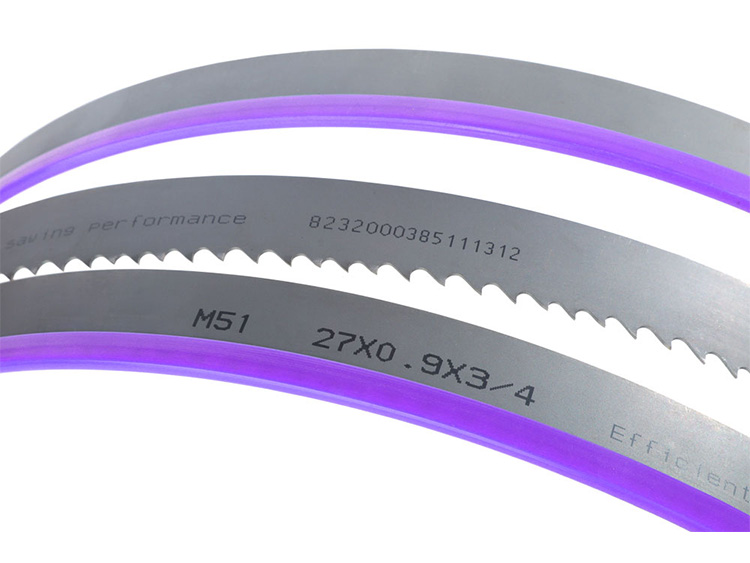
TPI is meaningless without the right blade grade. M42 bi-metal covers most steel at 4–10 TPI. M51 adds a harder tooth tip for abrasive and stainless duty. Carbide-tipped (TCT) blades hold an edge on stainless, Inconel, and high-strength alloys at higher surface speed. Match grade to the alloy first, then set TPI to the section.
Beyond pitch, the form decides aggression. Standard (zero or slight positive rake) is the all-rounder for steel. Hook (large positive rake, deep gullet) digs in fast for aluminum, brass, and soft non-ferrous—use it when you want aggressive feed and the finish allows it. Skip (very deep gullet, wide set) is for soft, gummy, or fibrous material where chip packing is the real enemy. Choosing form is as important as counting teeth.
A variable-pitch blade alternates TPI along its length (for example 4/6 or 6/10). The changing pitch breaks up resonant vibration, so the cut is quieter and the striping pattern on the face is reduced. Use variable pitch whenever you cut mixed sections, thin-wall tube, or profiles where a fixed pitch would hum and wander. It is the safe default for jobbing shops that never cut the same thing twice.
A blade stamp usually reads width × thickness – TPI – grade, e.g. 34×1.1 – 4/6 – M42. Width and thickness set the beam strength (wider and thicker resists deflection on big sections); the TPI pair tells you it is variable pitch; the grade tells you the tooth material. When you reorder, give all three so the supplier ships the exact blade your machine and mix need.
Imagine a shop cutting three things daily: 50 mm carbon steel rounds, 2 mm-wall stainless tube, and 80×80 mm aluminum extrusion. One blade cannot do all three well. The steel round wants a 3–4 TPI M42 blade for fast, cool cutting. The stainless tube wants an 8–10 TPI (or 6/10 variable) M51 blade to stop wall collapse and resist work-hardening. The aluminum extrusion wants a 6–10 TPI hook-tooth blade for clearance. The practical answer is three blades and a one-minute change, not one compromised blade and a pile of scrap. Keep coarse, fine, and variable blades racked and labeled by TPI.
Finish and squareness track TPI more than most operators expect. A coarse blade leaves a coarser face and, on small sections, a slightly wavy cut because each tooth removes a larger arc. A fine blade leaves a smoother face and holds squareness better on thin stock because more teeth share the load. If the next operation is welding or machining, a finer blade (or a secondary facing pass) pays for itself in less prep. The TPI chart above is your starting point; tune within ±2 TPI once you see the actual face.
Blade cost is not the sticker price—it is cost per cut. A coarse blade that strips on thin tube is expensive even if cheap to buy, because you throw it away after a few hundred cuts. A correctly specified fine or variable blade lasts many times longer on that same tube. Track blades by pieces cut, not by calendar, and you will quickly see that the right TPI lowers total consumable spend even when the blade itself costs more. Coolant delivery and feed pressure matter too, but TPI is the first dial to set correctly.
TPI is only one axis of the blade spec; width and thickness set beam strength. A wide, thick blade resists deflection on big solid sections and lets you run coarse TPI fast without the cut wandering. A narrow blade is for contours and small sections where a wide one would not fit the curve. The mistake is pairing a coarse TPI with a narrow blade on thin stock—too few teeth engage and the blade chatters—or a fine TPI with a wide blade on solid stock—gullets clog. Read the full marking (width × thickness – TPI – grade) and choose all three for the job, not just the teeth count.
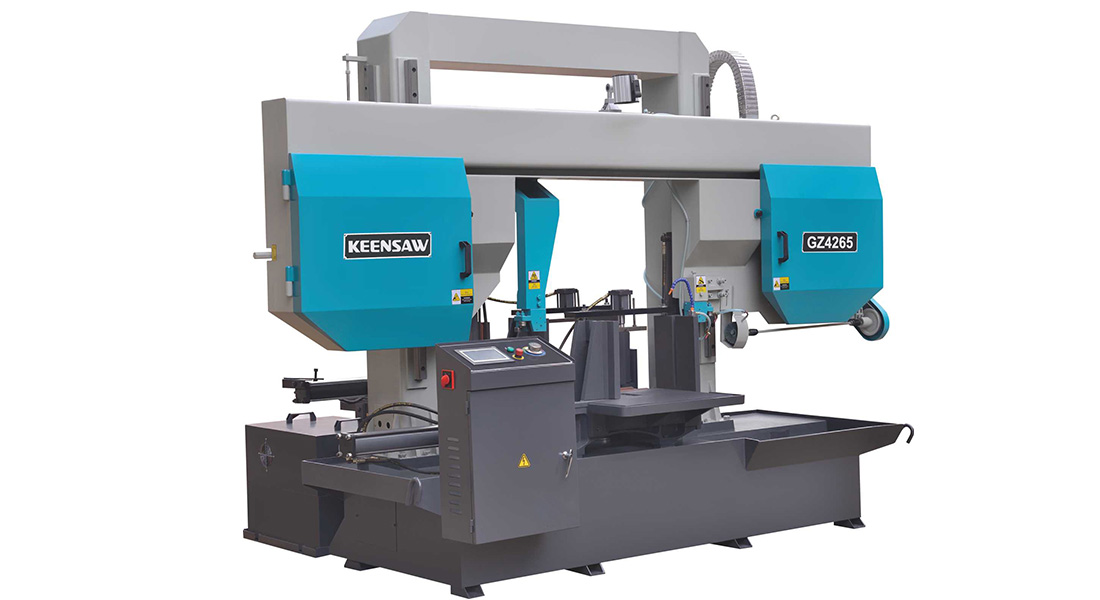
Not sure which blade your mix needs? KEENSAW supplies M42, M51, and carbide-tipped band saw blades in the widths and pitches your machines run. Send us your material, section, and daily volume and we’ll recommend the exact blade specification and TPI.
Contact us if you have any questions we will reply as soon aspossible