Short answer: Tooth stripping on a automatic band saw cutting titanium or alloy steel is almost always work-hardening from too-low surface speed plus too-high feed pressure — the teeth skate, the material work-hardens, and the next tooth rips out. Fix it by (1) raising blade speed into the titanium/alloy window, (2) cutting feed force by 25–40%, (3) using a positive-rake variable-pitch blade, and (4) flooding coolant so swarf clears. If stripping persists, the material is work-hardening under the gullet — back off feed until chips curl, not smear.
Titanium and high-strength alloy steels have low thermal conductivity and a strong tendency to work-harden. When feed pressure is too high for the speed, the tooth cannot shear a chip — it rubs, the surface hardens, and the following tooth meets hardened material it cannot cut, so it fractures at the gullet. The KEENSAW cutting-speed chart shows titanium needs a tighter speed window than mild steel precisely for this reason.
| Step | Action | Why |
|---|---|---|
| 1 | Raise blade speed to the titanium/alloy window | Prevents skating & work-hardening |
| 2 | Cut feed force 25–40% | Lets teeth shear a chip, not rub |
| 3 | Switch to positive-rake variable-pitch blade | Reduces load per tooth, breaks resonance |
| 4 | Flood coolant, clear swarf | Carries heat & chips away from gullet |
| 5 | Re-tension & track blade | Stripping hides a loose/wandering blade |
The band saw blade type guide recommends for these materials:
| Material | Blade speed | Feed (relative) |
|---|---|---|
| Titanium (CP / 6Al-4V) | Low (special window) | Gentle — never force |
| Alloy steel (4140 / 4340) | Moderate | Moderate, watch work-harden |
| Stainless (303 / 316) | Low–moderate | Gentle |
For exact numbers by grade, use the blade-by-material selection guide.
Stripping on titanium is frequently a coolant problem, not a blade problem. Titanium’s heat stays at the cut; without aggressive flood, the tooth tip softens and the gullet packs with smeared swarf. Verify nozzle aim, pressure, and concentration before changing anything else.
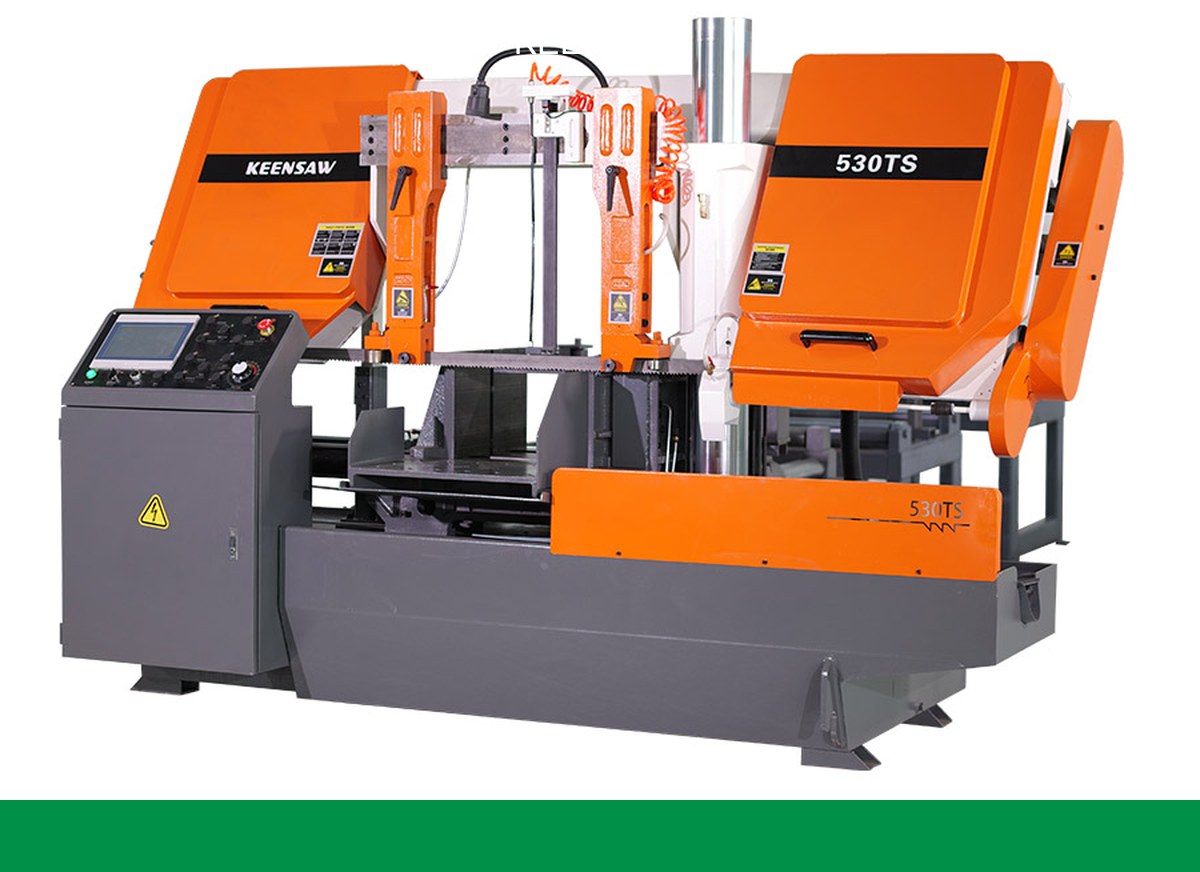
If you have corrected speed, feed, and coolant and teeth still strip, the blade is wrong for the job — see main causes of band saw blade breakage and whether your blade is costing more than it should. A rigid dual-column saw like the BSVP530CNC also reduces the micro-chatter that initiates stripping.
Titanium work-hardens and conducts heat poorly, so a tooth that skates hardens the surface and the next tooth meets uncuttable material — it fractures instead of cutting.
Decrease feed force by 25–40% and raise speed into the material window. Forcing feed is what causes stripping.
A variable-pitch positive-rake blade (e.g., 3/4–4/6 TPI) spreads tooth load and silences chatter. See the blade-type guide.
For titanium, yes — flood coolant is the single biggest non-blade factor in preventing stripping.
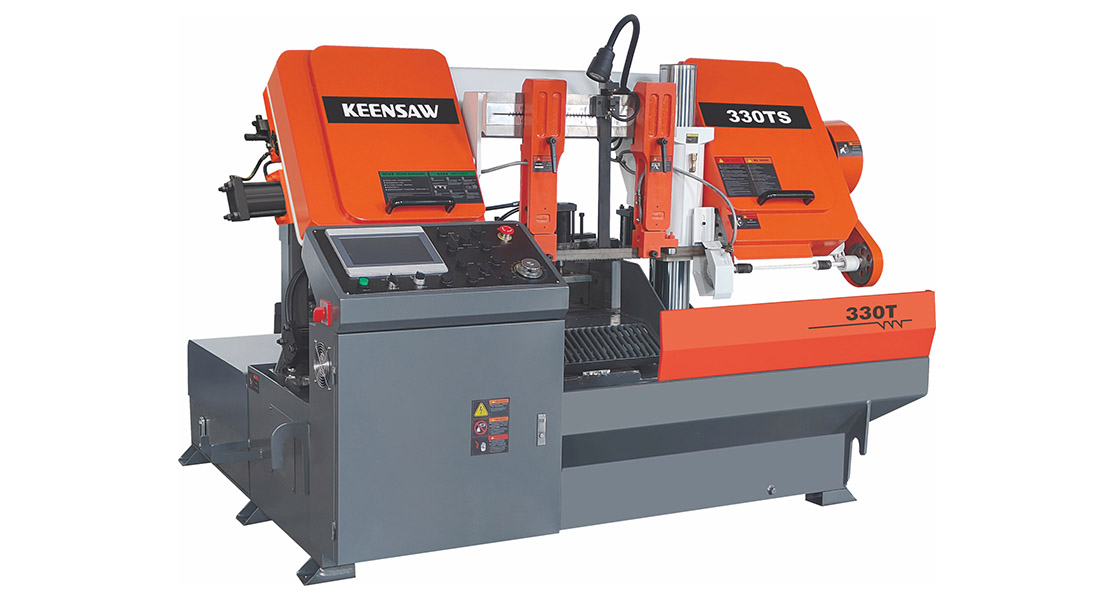
A rigid dual-column machine (like BSVP530CNC) cuts the micro-chatter that starts gullet fractures.
Send the exact grade to the KEENSAW team and they will size speed/feed/blade for your saw.
Tell KEENSAW your saw model, material grade, and section size — they will send the exact speed, feed, blade, and coolant settings that eliminate tooth stripping on your line. Request the parameter sheet →
Contact us if you have any questions we will reply as soon aspossible