Introduction
Choosing the right saw blade is essential for achieving clean, precise cuts in your materials. Whether you’re cutting metal, or other materials, selecting the appropriate saw blade will significantly affect your project’s outcome. This guide will help you understand the different types of saw blades and their specific uses.
What Are Saw Blades?
Saw blades are cutting tools used in various industries for cutting different materials. The blade’s teeth are designed to perform the cutting action, and the material of the blade itself can significantly impact its durability and cutting efficiency. Saw blades come in a variety of shapes and sizes, each designed for specific cutting tasks.
Types of Saw Blades
Circular Saw Blades
Circular saw blades are the most common type of saw blade used in both professional and DIY settings. These blades feature a round, toothed edge that rotates to cut through materials.
- Use: Cutting plastics, metals, and more.
- Ideal For: Construction and carpentry applications, especially for straight cuts.
TCT (Tungsten Carbide Tipped) Saw Blades
TCT saw blades feature tips made from tungsten carbide, a hard, durable material that offers superior cutting performance.
- Use: Cutting through harder materials like metal and PVC pipes.
- Ideal For: Heavy-duty cutting, construction, and metalworking.

TCT SAW BLADE 1
PVD Coated TCT Saw Blades
PVD (Physical Vapor Deposition) coated TCT saw blades are enhanced with a special coating to increase wear resistance, reduce friction, and extend the blade’s lifespan.
- Use: Ideal for cutting non-ferrous metals such as aluminum and copper.
- Ideal For: Industries like automotive and aerospace, where high performance and precision are critical.

PVD Coated TCT Saw Blade
High-Speed Steel (HSS) Bi-Metal Bandsaw Blades
HSS Bi-Metal Bandsaw blades combine high-speed steel teeth with a flexible backing, providing high durability and cutting efficiency for tougher materials.
- Use: Cutting through hard metals and alloys, such as stainless steel and titanium.
- Ideal For: Industrial applications where precision and longevity are required.

HSS Circular Saw Blade
Band Saw Blades
Band saw blades are continuous loops of metal used for cutting a variety of materials, offering smooth and precise cuts.
- Use: Cutting metal, and plastic in straight or curved lines.
- Ideal For: Metalworking, and general fabrication.
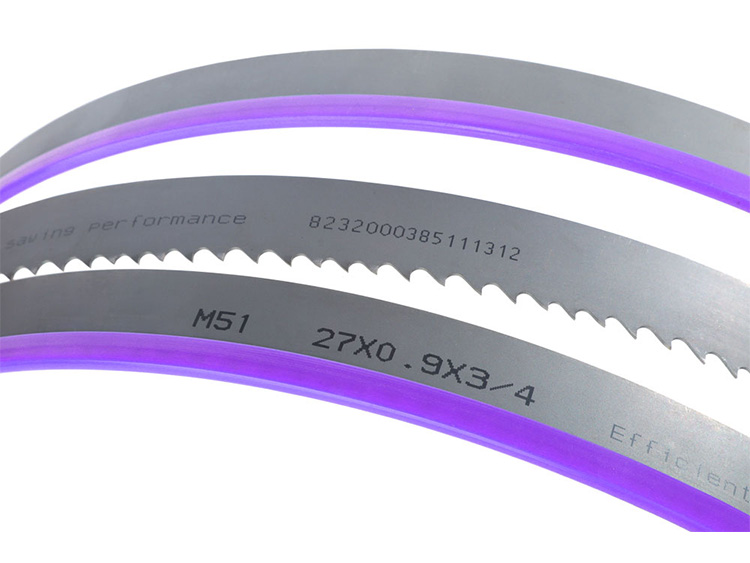
HSS M51 band saw blade
Common Saw Blade Materials and Coatings
- Tungsten Carbide (TCT): Offers excellent cutting power and durability for harder materials.
- High-Speed Steel (HSS): Ideal for cutting through tough metals and providing longevity.
- PVD Coating: A special coating applied to increase the blade’s resistance to wear and corrosion.
- Bi-Metal Construction: Combines the best of high-speed steel and flexibility for a long-lasting cutting edge.
Advantages and Disadvantages of Different Saw Blades
Circular Saw Blades
- Advantages: Versatile, cost-effective, and easy to use.
- Disadvantages: Limited to straight cuts; not suitable for cutting hard materials.
TCT Saw Blades
- Advantages: Extremely durable, ideal for hard materials.
- Disadvantages: More expensive than regular steel blades.
PVD Coated TCT Saw Blades
- Advantages: Long lifespan, reduced friction, excellent for non-ferrous metals.
- Disadvantages: More expensive, and the coating can wear off over time.
HSS Bi-Metal Bandsaw Blades
- Advantages: Great for cutting tough metals; high resistance to wear.
- Disadvantages: Can be difficult to sharpen, more expensive than standard bandsaw blades.
Band Saw Blades
- Advantages: Precise, smooth cutting, can handle curved cuts.
- Disadvantages: Requires proper tensioning and maintenance for optimal performance.
How Saw Blade Teeth Affect Cutting Performance
The teeth of a saw blade are crucial for its performance. They come in various shapes and sizes, and their number, spacing, and sharpness determine how efficiently a blade cuts through materials.
- Fine Teeth: Ideal for cutting softer materials like providing smooth cuts.
- Coarse Teeth: Best for cutting through harder materials like metal, as they remove material quickly.
- Variable Teeth: These blades have teeth that vary in size and spacing, allowing for both smooth and fast cutting in a range of materials.
How to Choose the Right Saw Blade for Your Application
- For Metal: Go for HSS Bi-Metal Bandsaw blades or PVD Coated TCT blades for cutting metals like aluminum or steel.
- For Precision Cuts: Use band saw blades or fine-tooth circular saw blades for intricate cutting tasks.
How to Maintain Different Types of Saw Blades for Optimal Performance
- Keep the blade clean: Regularly remove dust and debris from the teeth to maintain cutting efficiency.
- Sharpening: For bi-metal blades, sharpening can extend the blade life. TCT blades should be professionally sharpened.
- Storage: Store your blades in a dry, cool environment to prevent rusting or coating wear.
FAQs
Q:How do I know which saw blade is best for cutting thick metal?
For cutting thick metal, use a HSS Bi-Metal Bandsaw blade or a TCT saw blade with tungsten carbide tips.
Q:Which saw blade is best for general cutting?
A circular saw blade is the most versatile for general cutting, ideal for basic metal cutting.
Q:What is the best saw blade for cutting aluminum?
A PVD Coated TCT saw blade is the best choice for cutting aluminum due to its durability and coating that reduces friction.
Conclusion
Selecting the right saw blade for your project is crucial for achieving efficient and clean cuts. Whether you’re working with metal, or specialized materials, each type of blade has its advantages and specific applications. At Keensaw, we offer a wide range of saw blades tailored for every cutting need. Contact us today to explore our selection and choose the perfect saw blade for your needs.