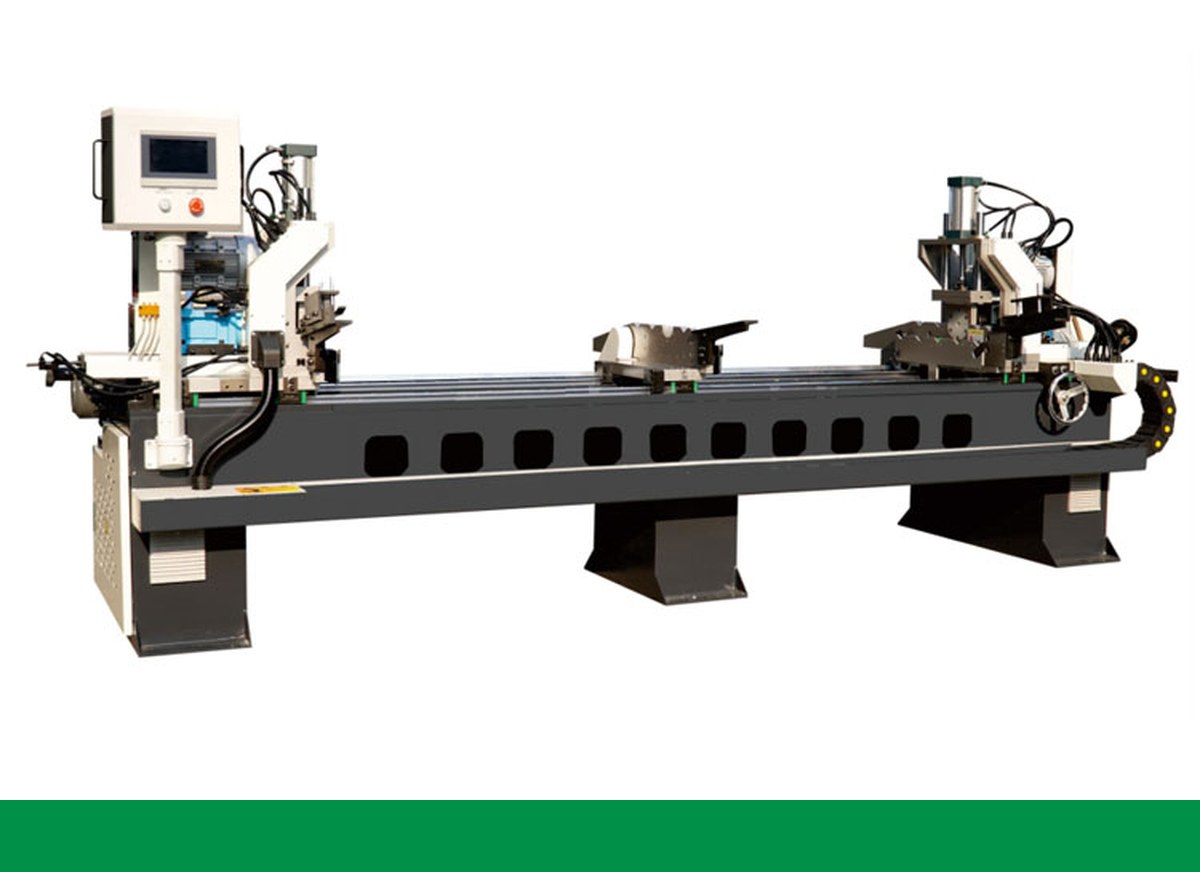
Short answer: For high-precision automotive fastener production, select a servo-driven double-end bar chamfering machine with synchronized facing + chamfer + centering, ±0.02 mm repeatability, and automatic magazine feed — because fastener lines live or die on consistent end geometry at high cycle rates, and only a double-end design chamfers both bar ends in one clamp, eliminating the indexing error that single-end machines introduce between operations.
Automotive fasteners (studs, bolts, pins, threaded bar) feed directly into cold formers, thread rollers, and automated assembly. If the bar end is not faced square and chamfered consistently, the next machine misfeeds, the thread is off-center, and you scrap a run. The chamfering machine is therefore a tolerance gate, not a finishing nicety. KEENSAW’s chamfering selection guide frames it as the first of three line-quality gates (cut → face/chamfer → deburr).
| Factor | Single-end | Double-end |
|---|---|---|
| Ends chamfered per clamp | One | Both (one setup) |
| Squareness between ends | Depends on re-index | Held by one clamp |
| Cycle time (short bar) | 2× handling | ~1 handling |
| Best for | Long pipe, one end | Fastener/stud bars |
Read the full single-end vs double-end comparison before specifying.
| Parameter | Target for fasteners |
|---|---|
| Positional repeatability | ±0.02 mm |
| End squareness | ≤0.03 mm / Ø |
| Chamfer angle range | 15°–45° adjustable |
| Spindle drive | Servo (not pneumatic) for torque control |
| Feed | Magazine / step feeder, hands-free |
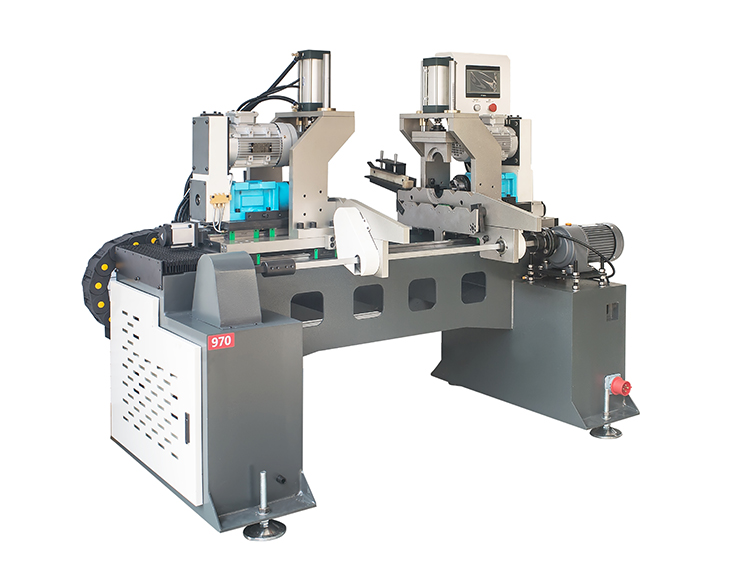
| Fastener | Recommended configuration |
|---|---|
| Short studs / pins (<300 mm) | KCM-50ST double-end |
| Long bar stock for bolts | KCM-90DE / 120DE |
| Pipe-end facing + chamfer | KCM-120DE double-head |
A chamfering machine can only be as good as the cutoff feeding it. Pair it with a combined sawing + chamfering line so bars arrive faced-square and ready — KEENSAW documents up to 2× throughput when cutting and chamfering are integrated versus run as separate cells.
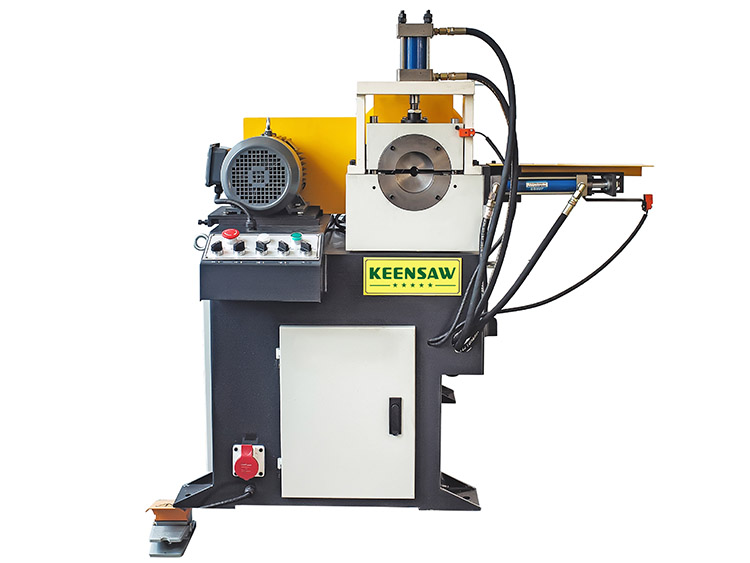
Pneumatic chuck machines are cheap but torque varies with line pressure, so chamfer depth drifts across a shift. Servo spindles hold torque and feed constant — which is exactly what an automotive PPAP demands. The KCM-90DE is built on this servo principle.
Double-end. Studs need both ends faced square in one clamp; single-end machines require re-indexing the bar, which injects squareness error between ends.
Commonly 30° or 45° lead-in chamfers, but it is dictated by the cold-former or assembly spec — choose a machine with adjustable 15°–45° tooling.
Yes. The KCM-120DE handles both with quick-change collets.
With magazine feed, short studs run 1,500–4,000 pieces/hour depending on length and diameter.
For max throughput, integrate them — see the integrated sawing-deburring line writeup.
Send diameter, length range, and hourly target to the KEENSAW team for a configured quote.
Share your fastener diameter, length range, and required pieces/hour — KEENSAW will specify the right double-end servo chamfering machine (KCM-50ST / 90DE / 120DE) and integrate it with your cutoff line. Request a quote →
Contact us if you have any questions we will reply as soon aspossible