In the competitive landscape of industrial metal cutting, choosing the right equipment is the difference between a high-profit operation and a bottleneck. One of the most frequent points of confusion for procurement managers is the distinction between a CNC high-speed circular saw and a traditional circular cold saw.
While both use circular blades, the cutting technology, feed rates, and tooling costs vary significantly. At Keensaw, we specialize in providing heavy-duty metal sawing machines and high-performance consumables. This guide will help you master saw blade selection and optimize your metal fabrication workflow.
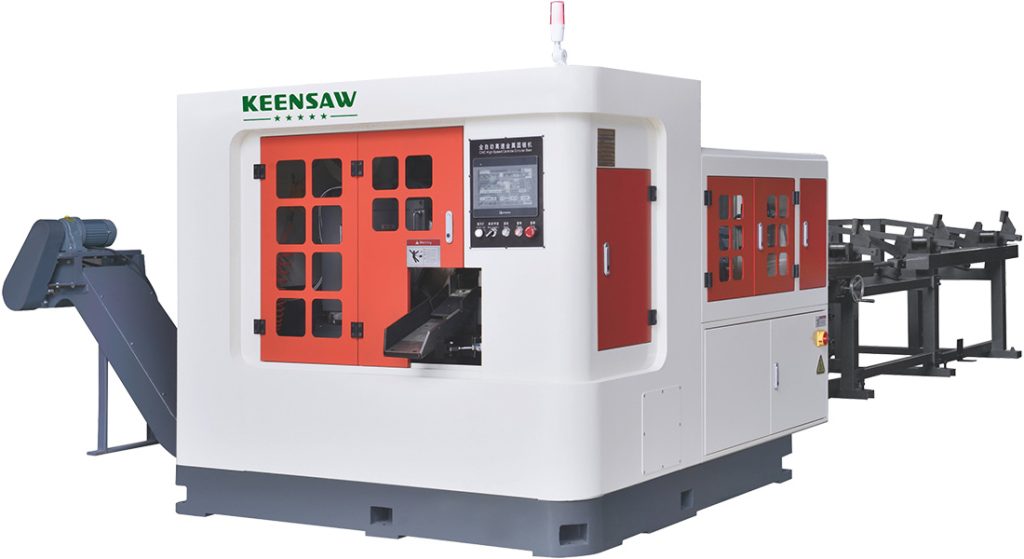
KCS 70B CNC Circular Sawing Machine
CNC carbide circular saws, such as the Keensaw KCS series, are designed for high-volume environments requiring high-precision metal cutting.
Primary Tooling: These machines utilize TCT (Tungsten Carbide Tipped) saw blades and Cermet-tipped blades.
Performance Metrics: They operate at high surface speeds (SFPM) and utilize servo-driven feeding systems to ensure micron-level accuracy.
Material Suitability: Ideal for solid carbon steel bars, alloy steel, and stainless steel billets.
Key Advantage: The automatic chip removal system and minimal quantity lubrication (MQL) ensure a clean workspace and an incredible surface finish that often bypasses the need for secondary milling.
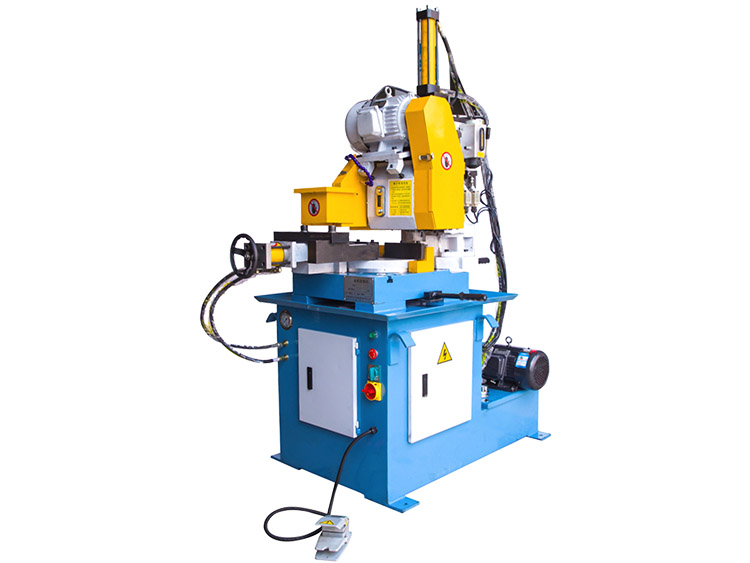
KTC-425U Semi Automatic Circular Cold Saw for Pipe Cutting
A circular cold saw machine is the go-to solution for shops focusing on structural steel cutting and custom fabrication.
Primary Tooling: These machines rely on HSS (High-Speed Steel) saw blades, often coated with TiN (Titanium Nitride) or TiAlN for extended tool life.
Operating Mechanics: Cold saws use a high-torque reduction gearbox to maintain low RPM, preventing heat buildup in the workpiece.
Best For: Cutting hollow profiles, steel pipes, square tubing, and light-gauge angles.
Key Advantage: The low cost-per-cut is a major benefit, as HSS circular blades can be resharpened multiple times using a CNC blade sharpener.
Understanding saw blade compatibility is essential to avoid premature tool failure.
|
Feature |
Traditional Cold Saw (HSS) |
|
|
Cutting Speed |
High Velocity / Fast Cycle Times |
Low Velocity / High Torque |
|
Blade Material |
Carbide/Cermet Tipped |
Solid High-Speed Steel |
|
Workpiece |
Solid Metal Bars |
Tubes, Pipes, & Profiles |
|
Cooling System |
Oil Mist / MQL |
Flood Coolant |
|
Automation |
Fully Automatic CNC |
Manual / Semi-Automatic |
Warning: Never install a TCT carbide blade on a low-speed manual cold saw. The lack of rigidity and incorrect chip load will cause the brittle carbide tips to shatter, leading to potential injury and equipment damage.
While the table above provides a quick snapshot, the technical “why” behind these specifications is what determines your production efficiency.
The most striking difference is the speed. A Keensaw CNC Circular Saw doesn’t just cut; it “slices” at incredibly high velocities. This is made possible by Carbide-tipped technology, which can withstand much higher thermal loads than HSS. If your goal is high-volume throughput for solid materials, the high SFPM of a CNC machine is your biggest competitive advantage.
A Traditional Cold Saw relies on a massive reduction gearbox to deliver high torque at low RPM. This is critical for HSS blades, which are designed to “scoop” out metal chips without generating excessive friction heat. This slow and steady approach is what makes it the “king of precision” for thin-walled tubes and delicate profiles where heat deformation must be avoided.
Flood Coolant (Cold Saw): Uses a high volume of liquid to wash away chips and keep the blade cold. It’s effective for general fabrication but can be messy.
MQL / Oil Mist (CNC Saw): Keensaw’s CNC machines typically utilize Minimum Quantity Lubrication (MQL). A fine oil mist is sprayed precisely onto the blade teeth. This keeps the workspace clean and ensures the chips remain dry, which is highly beneficial for scrap recycling and secondary processes.
Because CNC saws use rigid Cermet or TCT blades paired with servo-controlled feed rates, vibration is virtually eliminated. This results in a “mirror-like” surface finish on the cut end. While a traditional cold saw produces a very clean cut, it may still leave slight “saw marks” that might require deburring for high-precision assembly.
When selecting a replacement blade from our catalog, always verify your machine’s Spindle RPM and Motor Power (HP/kW). A common mistake is underpowering a high-speed blade, which leads to “lugging” the motor and snapping the expensive carbide tips. If you are unsure, our engineers can provide a custom blade-to-machine compatibility audit.
When auditing your sawing department, consider these three factors to improve blade longevity:
Vibration Control: CNC saws feature heavy-duty cast iron bases to dampen vibration—a requirement for delicate Cermet blades.
Blade Tooth Pitch: Ensure you match the tooth geometry to the wall thickness of your material. (Contact Keensaw engineers for a custom tooth count calculation).
Material Grade: High-hardness alloys require specific PVD coatings on the blade to resist thermal wear.
No. TCT blades require high speeds and extreme stability. Using them on a low-RPM manual machine will cause the brittle carbide tips to vibrate and shatter instantly.
The Cold Saw. High-speed CNC saws are optimized for solid bars. For thin pipes and profiles, a cold saw with an HSS blade provides a cleaner cut without deforming the material.
This is usually caused by incorrect feed rates or a lack of MQL (Minimum Quantity Lubrication). Ensure your CNC settings match the material hardness to extend your blade longevity.
It depends on the volume. HSS blades have a lower initial cost and can be resharpened. However, for mass production, TCT blades are more cost-effective due to significantly faster cycle times and reduced labor costs.
Whether you are looking for a fully automatic CNC sawing line to boost throughput or high-quality replacement HSS blades for your workshop, Keensaw delivers turnkey metal cutting solutions.
Stop guessing and start optimizing. Selecting the right metal sawing machine is the first step toward reducing material waste and increasing your bottom line.
Ready to upgrade your shop?
Contact us if you have any questions we will reply as soon aspossible