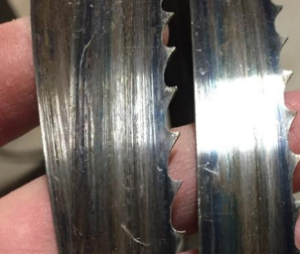
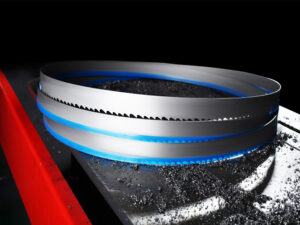
In high-volume manufacturing, the purchase price of a bandsaw or its blades is only the tip of the iceberg. Many shops struggle with high production costs, unaware that the culprit is a subpar blade band saw.
|
|
|
If you are looking for the best band saw blades for metal, you need to look beyond the price tag and evaluate the “cost-per-cut.”
To understand the value, let’s compare our industrial bandsaw blades with standard market options:
|
Feature |
Standard Band Saw Blades |
Keensaw Industrial Blades |
|
Blade Material |
Basic Carbon Steel / Low Alloy |
Premium M42/M51 Bi-Metal |
|
Heat Resistance |
Dulls quickly at high speeds |
Exceptional red hardness for high-speed friction |
|
Durability |
High replacement frequency |
Significantly extended service life between changes |
|
Cutting Accuracy |
Prone to “wavy” cuts under pressure |
Strict tolerances for straight, clean cuts |
When evaluating different bandsaw blade types, the difference usually lies in the tooth tip material and the backing steel.
Standard Blades: Most generic types of band saw blades use basic carbon steel. While they work for light tasks, they lack the heat resistance required for cutting metal with a band saw in an industrial setting.
Keensaw’s Industrial Advantage: Our industrial bandsaw blades are engineered with premium Bi-metal and Carbide-tipped technology. Specifically designed as bandsaw blades for cutting steel, these tools feature a high-speed steel edge that maintains sharpness even when the friction of cutting metal with a band saw generates extreme heat.
One major point of failure for low-end suppliers is the lack of consistency in bandsaw blade sizes. A blade that is slightly out of spec will vibrate, leading to “wavy” cuts and premature blade fatigue.
Keensaw offers a comprehensive range of bandsaw blade sizes to fit every major machine brand. Whether you need a heavy-duty blade band saw for solid billets or a specialized band saw knife blade for clean slicing of non-metallic industrial materials, our manufacturing tolerances ensure a perfect fit every time.
Let’s look at the uses of a bandsaw in a typical steel service center. Using standard bandsaw blades for cutting metal, a technician might have to change the blade every 50 cuts due to tooth strippage.
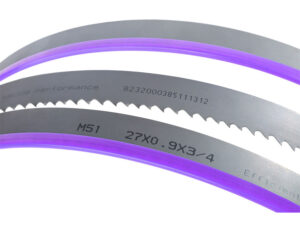
In contrast, Keensaw’s bandsaw blades for cutting steel are designed with a reinforced tooth geometry. This specific design allows for:
Faster Feed Rates: Reducing the time spent per piece.
Longer Life: Longer than standard band saw blade types.
Reduced Finishing: The surface finish is so clean that secondary grinding is often unnecessary.
Even the best industrial bandsaw blades will fail if handled incorrectly. To maximize your investment, follow these Keensaw-certified bandsaw how to use protocols:
Run the first few cuts at 50% feed pressure to develop a natural radius on the tooth edge.
The color and shape of the metal chips will tell you if your speed and tension are correct for the bandsaw blade types you are using.
Ensure your machine guides are not worn out, as even a premium a bandsaw blade cannot compensate for poor machine maintenance.
Q: Why choose Keensaw over cheaper brands?
A: Our blades offer a lower “cost-per-cut” by lasting significantly longer and reducing machine downtime.
Q: Do you offer custom bandsaw blade sizes?
A: Yes, we provide tailored lengths and widths to fit any industrial machine specifications.
Q: What are the best band saw blades for metal?
A: Bi-metal M42 blades are generally the best choice for balancing cutting speed and blade longevity.
Q: How do I order industrial bandsaw blades?
A: You can contact our sales team directly through the inquiry form for bulk pricing and testing report
What does a bandsaw do for your business? It should be a source of profit, not a source of frustration. By choosing Keensaw, you aren’t just buying bandsaw blades for cutting metal; you are investing in a partnership that prioritizes your uptime and precision.
Stop settling for generic types of bandsaw blades. Contact Keensaw today to find the perfect bandsaw blade sizes and types for your specific application and start cutting your costs, not just your metal.
Contact us if you have any questions we will reply as soon aspossible