Introduction
Choosing the right pipe shaping method directly affects production efficiency, connection quality, and overall manufacturing cost. When you compare pipe end forming with traditional pipe shaping, you will notice clear differences in precision, automation, and scalability. Understanding these differences helps you select the most suitable solution for your application and long-term production goals.
What Is Pipe End Forming?
Pipe end forming is a specialized process that reshapes the end of a pipe using dedicated forming machines. Instead of cutting material away, the pipe end is plastically deformed to achieve precise shapes such as flaring, beading, expanding, or reducing.
You typically use pipe end forming when you need:
- High dimensional consistency
- Strong, leak-free connections
- Compatibility with welding or fitting assembly
- Efficient mass production
Pipe end forming machines are widely used in automotive, HVAC, furniture, and industrial equipment manufacturing.
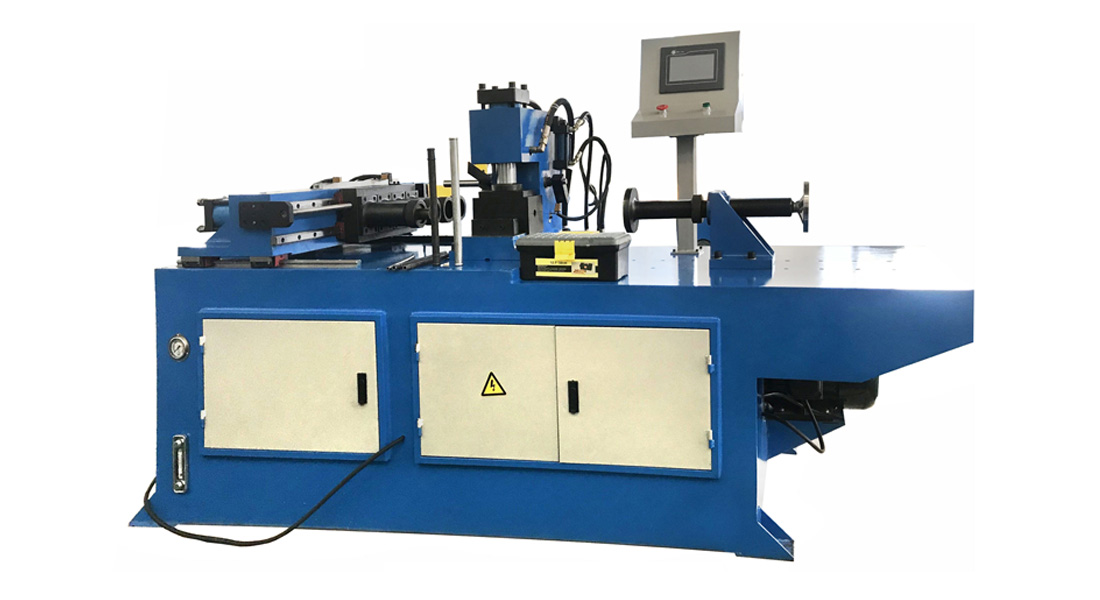
Multiple Stations Tube End Forming Machine 2
What Is Traditional Pipe Shaping?
Traditional pipe shaping refers to conventional methods such as cutting, chamfering, grinding, drilling, or manual bending. These processes rely heavily on basic machine tools or manual operations to modify pipe geometry.
This method is commonly chosen when:
- Production volume is low
- Flexibility is more important than consistency
- Budget constraints limit equipment investment
While traditional pipe shaping is versatile, it often requires secondary operations to meet connection or assembly requirements.
Key Differences Between Pipe End Forming and Traditional Pipe Shaping
|
Aspect
|
Pipe End Forming
|
Traditional Pipe Shaping
|
|
Process focus
|
Precisely forms the pipe end geometry
|
Shapes or cuts the pipe using basic machining
|
|
Accuracy
|
High precision and repeatability
|
Lower precision, operator-dependent
|
|
Efficiency
|
Fast cycle times for mass production
|
Slower, suitable for small batches
|
|
Automation level
|
High, machine-driven
|
Low to medium, often manual
|
|
Connection quality
|
Uniform, tight-fitting pipe ends
|
Often requires secondary finishing
|
|
Application scale
|
Medium to large-scale industrial use
|
Small-scale or custom projects
|
|
Cost structure
|
Higher initial investment, lower long-term cost
|
Lower initial cost, higher labor cost
|
Pipe end forming is designed for efficiency and consistency, making it ideal for industrial production lines. Traditional pipe shaping offers flexibility but falls short in speed and repeatability. Your decision should be based on production volume, precision requirements, and total cost over time.
Benefits of Pipe End Forming for Industrial Use
Pipe end forming offers clear advantages when industrial performance matters:
- Improved joint strength and sealing performance
- Reduced material waste compared to cutting processes
- Consistent results across large production batches
- Lower labor dependency through automation
- Better preparation for welding or assembly
If you prioritize quality, efficiency, and scalability, pipe end forming is often the better choice.
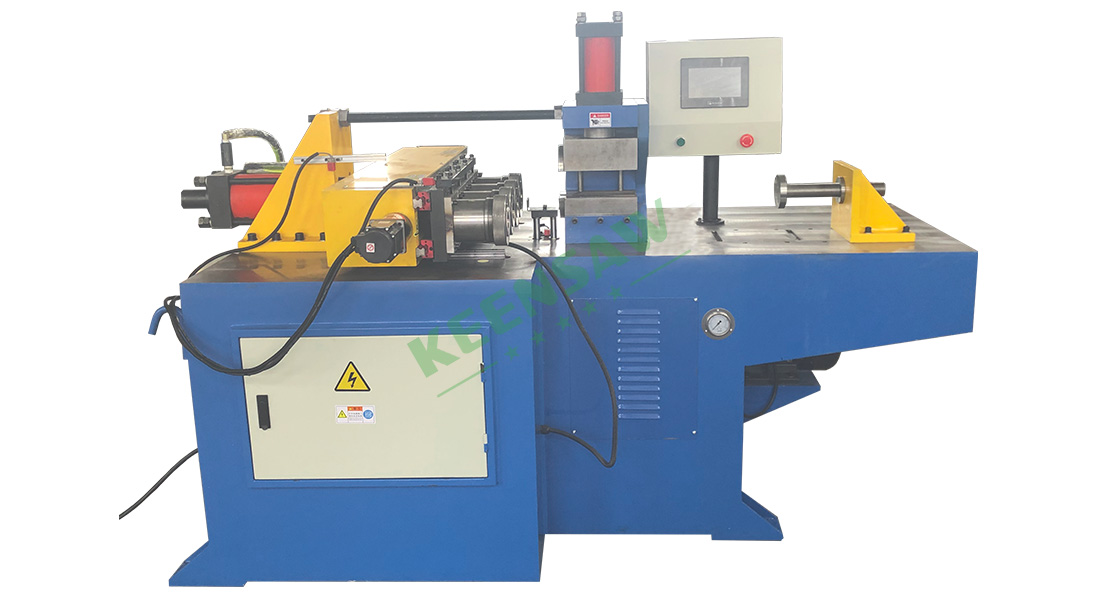
Multiple Stations Tube End Forming Machine
Benefits of Traditional Pipe Shaping
Traditional pipe shaping still plays an important role in certain applications:
- Lower equipment investment
- Greater flexibility for custom or one-off parts
- Easy setup for simple shaping tasks
- Suitable for workshops or small-scale fabrication
For low-volume projects or frequent design changes, traditional shaping remains practical.
How to Choose the Right Pipe Shaping Method
When deciding between pipe end forming and traditional pipe shaping, consider the following:
- Production volume: High-volume production favors pipe end forming
- Precision requirements: Tight tolerances require forming machines
- Labor cost: Automated forming reduces manual labor
- Budget planning: Long-term cost savings often justify forming equipment
- Application needs: Welding, sealing, or press-fit connections benefit from formed ends
By matching the method to your application, you can improve both efficiency and product quality.
FAQs
Q: What is the main difference between pipe end forming and traditional pipe shaping?
Pipe end forming reshapes the pipe end through deformation, while traditional shaping removes material or relies on manual processing.
Q: Is pipe end forming suitable for small-scale production?
It can be, but traditional pipe shaping is usually more cost-effective for small batches.
Q: Does pipe end forming improve connection quality?
Yes, formed pipe ends provide better consistency and sealing for assembly and welding.
Q: Which method is better for automation?
Pipe end forming is far more suitable for automated production lines.
Conclusion
Pipe end forming and traditional pipe shaping each serve different manufacturing needs. If you focus on precision, efficiency, and large-scale production, pipe end forming is the superior solution. For flexible, low-volume work, traditional shaping remains useful. Choosing the right method ensures better performance, lower costs, and reliable results.
At keensaw, we provide advanced pipe end forming solutions designed to help you improve productivity and achieve consistent, high-quality pipe processing for modern industrial applications.